Listen to the Membranophone
Tip: press play to see the sound's live frequency spectrum in blue over the waveform.
How the Membranophone makes its sound
In the Hornbostel–Sachs system, which classifies instruments by how they produce sound, the Membranophone belongs to the membranophones (drums): sound comes from a vibrating stretched membrane.
Players shape its sound through technique and materials; the resonating body filters the raw vibration, boosting some harmonics and damping others.
From Wikipedia
A membranophone is any musical instrument which produces sound primarily by way of a vibrating stretched membrane. It is one of the four main divisions of instruments in the original Hornbostel-Sachs scheme of musical instrument classification.
The sound is produced by a membrane ["skin" or "head"] stretched over an opening. Most, but not all, membranophones are generally called drums. They are classified according to material, if it's single or double headed, shape, skin(s), skin fastening, playing positions, and manner of playing.
Other membranophones


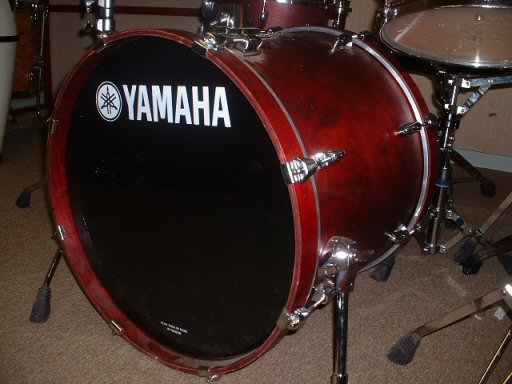

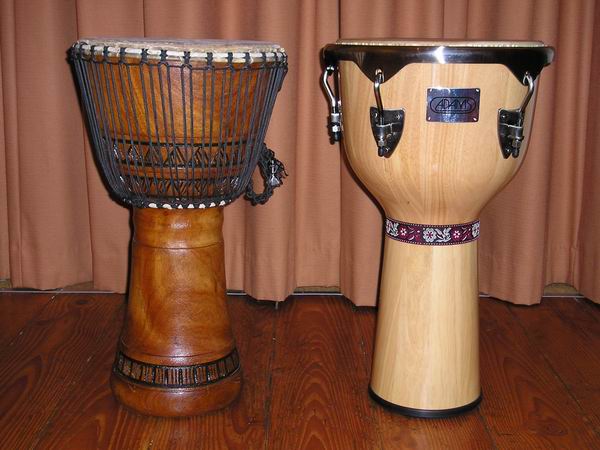
Frequently asked questions
What does the Membranophone sound like?
Listen to 1 recording on this page. As one of the membranophones, its sound comes from the way sound comes from a vibrating stretched membrane.
What type of instrument is the Membranophone?
It is classified as membranophones (drums) (Hornbostel–Sachs 2).
Sources & credits
- Rhythm of Dhak a huge membranophone instrument from Bengal and Assam, used in Hindu… by Sumita Roy Dutta – CC BY-SA 4.0 · Wikimedia Commons
- Wikidata Q212892 – CC0
- Wikipedia: Membranophone – CC BY-SA 4.0
- Image by sheila miguez from Chicago, IL – CC BY-SA 2.0