How the spitzharfe makes its sound
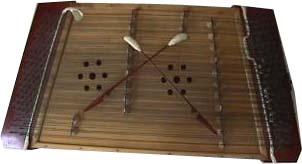
In the Hornbostel–Sachs system, which classifies instruments by how they produce sound, the spitzharfe belongs to the board zithers: strings are stretched across a flat board or box – the family of the piano, harpsichord and hammered dulcimer.
More broadly it is one of the chordophones (string instruments), where sound comes from vibrating strings, amplified by a resonating body.
Its timbre – the colour that lets you tell it apart from other instruments playing the same note – comes from the mix of overtones its body and resonator emphasise.
From Wikipedia
A spitzharfe (or arpanetta) is a musical string instrument popular in Italy and Germany in the seventeenth and eighteenth centuries. Up to 90 centimetres tall, it is designed to be placed on a table, and consists of two sets of strings - steel strings to produce the melody and brass strings for the accompaniment. It is played by plucking with fingers, in a manner similar to the harp.
Other board zithers




Frequently asked questions
What does a spitzharfe sound like?
As one of the board zithers, its sound comes from the way strings are stretched across a flat board or box.
What type of instrument is the spitzharfe?
It is classified as board zithers (Hornbostel–Sachs 314.122-5).