Listen to the theremin
Tip: press play to see the sound's live frequency spectrum in blue over the waveform.
How the theremin makes its sound
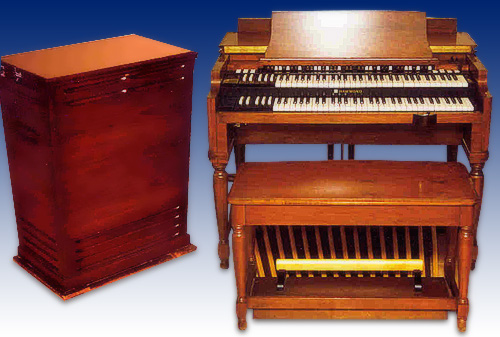
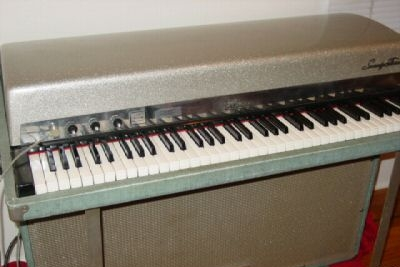
In the Hornbostel–Sachs system, which classifies instruments by how they produce sound, the theremin belongs to the electrophones: sound is produced or shaped electronically – synthesizers, the theremin and electric organs.
Players shape its sound through technique and materials; the resonating body filters the raw vibration, boosting some harmonics and damping others.
From Wikipedia
The theremin (; originally known as the ætherphone, etherphone, thereminophone or termenvox/thereminvox) is an electronic musical instrument controlled without physical contact by the performer (who is known as a thereminist). It is named after its inventor, Leon Theremin, who patented the device in 1928.
The instrument's controlling section usually consists of two metal antennas that function not as radio antennas but rather as position sensors. Each antenna forms one half of a capacitor with each of the thereminist's hands as the other half of the capacitor. These antennas capacitively sense the relative position of the hands and control oscillators for frequency with one hand, and amplitude (volume) with the other. The electric signals from the theremin are amplified and sent to a loudspeaker.
Other electrophones




Questions people ask
Real questions from the Stack Exchange community – follow a link to read the discussion.
- What methods can I use to aid note accuracy when playing a Theremin · Music SE
- Building a pocket theremin · Electronics SE
Frequently asked questions
What does a theremin sound like?
Listen to 2 recordings on this page. As one of the electrophones, its sound comes from the way sound is produced or shaped electronically.
What type of instrument is the theremin?
It is classified as electrophones (Hornbostel–Sachs 531.1).
Sources & credits
- Vraaggesprek met Lucie Rosen over de theremin by PHOHI – Public domain · Wikimedia Commons
- Jugando con un theremin creado con arduino by Luis Alvaz – CC BY-SA 4.0 · Wikimedia Commons
- Wikidata Q207691 – CC0
- Wikipedia: Theremin – CC BY-SA 4.0
- Image by Hutschi – CC BY-SA 3.0