How the tubax makes its sound
In the Hornbostel–Sachs system, which classifies instruments by how they produce sound, the tubax belongs to the single-reed instruments: a single reed beats against a mouthpiece – clarinets and saxophones.
More broadly it is one of the aerophones (wind instruments), where sound comes from vibrating air.
Its timbre – the colour that lets you tell it apart from other instruments playing the same note – comes from the mix of overtones its body and resonator emphasise.
From Wikipedia
The tubax is a modified contrabass saxophone developed in 1999 by the German instrument maker Benedikt Eppelsheim. Eppelsheim's design uses the same fingering as the saxophone, while reducing the amount of expansion of its conical bore in relation to the length of tubing. This design modification results in a smaller volume of resonant air column, allowing the use of a smaller mouthpiece (baritone or bass size, instead of a larger contrabass mouthpiece), and more compactly folded tubing. The tubax exists in E♭ contrabass and B♭ or C subcontrabass sizes. Its name is a blend of the words "tuba" and "sax".
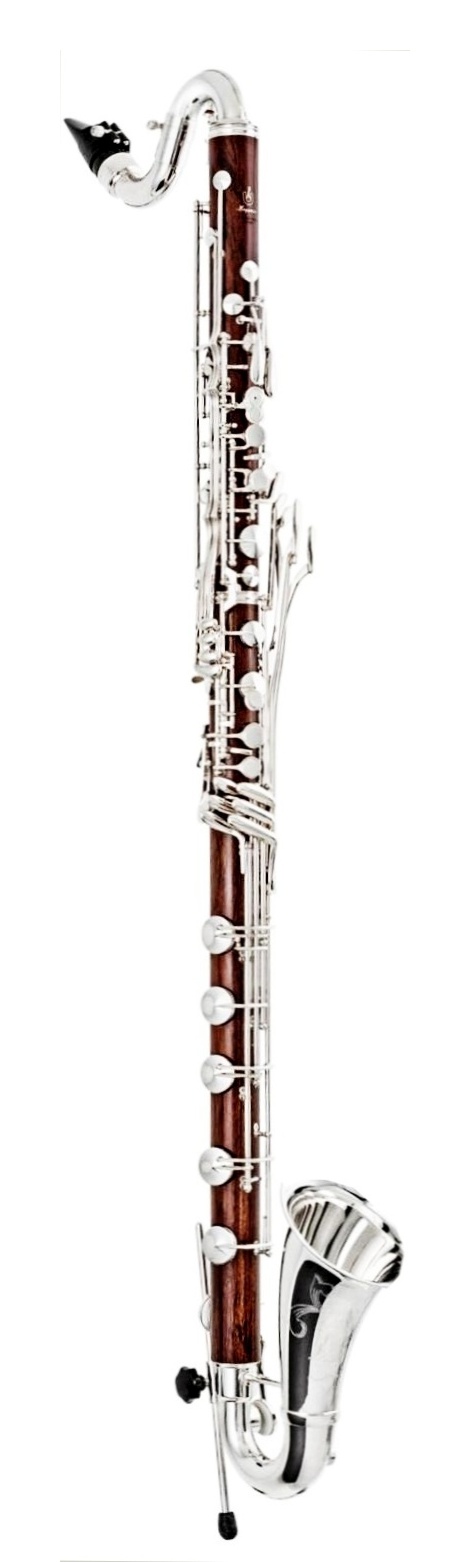
Other single-reed instruments




Frequently asked questions
What does a tubax sound like?
As one of the single-reed instruments, its sound comes from the way a single reed beats against a mouthpiece.
What type of instrument is the tubax?
It is classified as single-reed instruments (Hornbostel–Sachs 422.212-71).