How the berimbau makes its sound
In the Hornbostel–Sachs system, which classifies instruments by how they produce sound, the berimbau belongs to the bar zithers: strings are stretched along a rigid bar or stick, often with a gourd resonator.
More broadly it is one of the chordophones (string instruments), where sound comes from vibrating strings, amplified by a resonating body.
Its timbre – the colour that lets you tell it apart from other instruments playing the same note – comes from the mix of overtones its body and resonator emphasise.
From Wikipedia
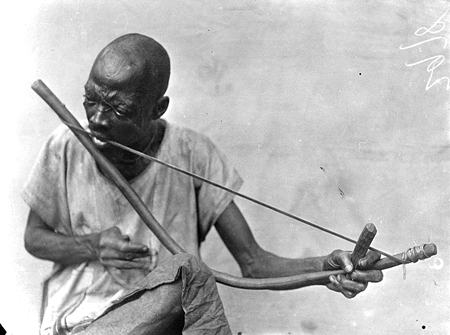
The berimbau is a traditional Angolan musical bow that is commonly used in Brazil. It is also known as sekitulege among the Baganda and Busoga. It consists of a single-stringed bow attached to a gourd resonator and is played with a stick and a coin or stone to create different tones and rhythms. The berimbau was used in many parts of Africa and Brazil during the 19th century to accompany chants and storytelling. It is part of the candomblé tradition, later incorporated into the Afro-Brazilian art capoeira. Until the mid-20th century, it was used almost exclusively within the black community, but after the popularization of capoeira, it gained wider popularity. Today, berimbau is used in various genres of popular music.
Other bar zithers


Frequently asked questions
What does a berimbau sound like?
As one of the bar zithers, its sound comes from the way strings are stretched along a rigid bar or stick, often with a gourd resonator.
What type of instrument is the berimbau?
It is classified as bar zithers (Hornbostel–Sachs 311.121.221).