How the violí de bufa makes its sound
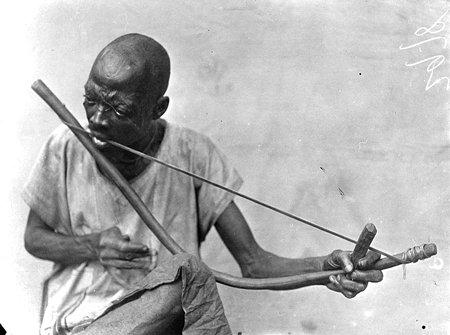
In the Hornbostel–Sachs system, which classifies instruments by how they produce sound, the violí de bufa belongs to the bar zithers: strings are stretched along a rigid bar or stick, often with a gourd resonator.
More broadly it is one of the chordophones (string instruments), where sound comes from vibrating strings, amplified by a resonating body.
Its timbre – the colour that lets you tell it apart from other instruments playing the same note – comes from the mix of overtones its body and resonator emphasise.
From Wikipedia
The violí de bufa is Catalan instrument, a type of bladder fiddle, made of a pig's bladder connected to a bowed stick of cane, over which pass one to three strings, that are "bowed" with another knobby stick, as though playing the double bass.
In Ripoll and other places bordering the Ter, the instrument is traditionally played during Carnestoltes (Carnival), and produces a deep and dull sound, like a simbomba marina.
Other bar zithers



Frequently asked questions
What does a violí de bufa sound like?
As one of the bar zithers, its sound comes from the way strings are stretched along a rigid bar or stick, often with a gourd resonator.
What type of instrument is the violí de bufa?
It is classified as bar zithers (Hornbostel–Sachs 311.22).