How the diddley bow makes its sound
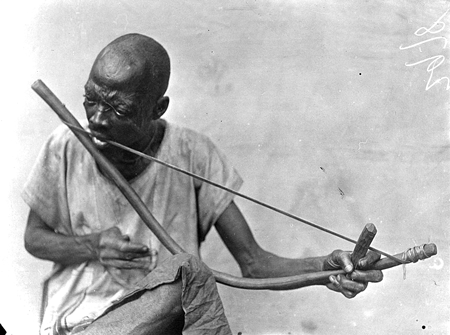
In the Hornbostel–Sachs system, which classifies instruments by how they produce sound, the diddley bow belongs to the bar zithers: strings are stretched along a rigid bar or stick, often with a gourd resonator.
More broadly it is one of the chordophones (string instruments), where sound comes from vibrating strings, amplified by a resonating body.
Players shape its sound through technique and materials; the resonating body filters the raw vibration, boosting some harmonics and damping others.
From Wikipedia
The diddley bow is a single-stringed American instrument that influenced the development of the blues sound. It consists of a single string of baling wire tensioned between two nails on a board over a glass bottle, which is used both as a bridge and as a means to amplify the instrument's sound.
It was traditionally considered a starter or children's instrument in the Deep South, especially in the African American community, and is rarely heard outside the rural South. It may have been influenced to some degree by West African instruments. Other nicknames for this instrument include "jitterbug" or "one-string," while an ethnomusicologist would formally call it a "monochord zither."
Other bar zithers



Frequently asked questions
What does a diddley bow sound like?
As one of the bar zithers, its sound comes from the way strings are stretched along a rigid bar or stick, often with a gourd resonator.
What type of instrument is the diddley bow?
It is classified as bar zithers (Hornbostel–Sachs 311.121.21).
Sources & credits
- Wikidata Q2059671 – CC0
- Wikipedia: Diddley bow – CC BY-SA 4.0
- Image by Beraldoleal – CC BY 3.0