How the umuduri makes its sound
In the Hornbostel–Sachs system, which classifies instruments by how they produce sound, the umuduri belongs to the bar zithers: strings are stretched along a rigid bar or stick, often with a gourd resonator.
More broadly it is one of the chordophones (string instruments), where sound comes from vibrating strings, amplified by a resonating body.
Its timbre – the colour that lets you tell it apart from other instruments playing the same note – comes from the mix of overtones its body and resonator emphasise.
From Wikipedia
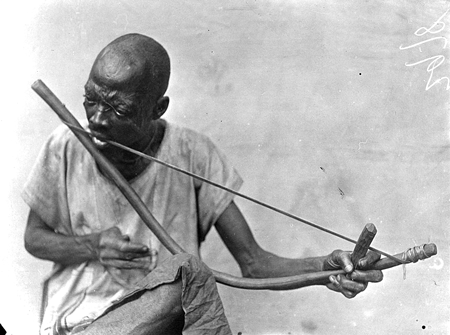
The umuduri is a Burundian and Rwandan stringed instrument. It is a musical bow consisting of a string supported by a flexible wooden string bearer or bow that is 125–135 cm in length. The string is traditionally made from plant fiber and animal gut, but the use of metal wire has become widespread.
Other bar zithers



Frequently asked questions
What does an umuduri sound like?
As one of the bar zithers, its sound comes from the way strings are stretched along a rigid bar or stick, often with a gourd resonator.
What type of instrument is the umuduri?
It is classified as bar zithers (Hornbostel–Sachs 311.111).
Where does the umuduri come from?
The umuduri originates from Rwanda.
Sources & credits
- Wikidata Q2478767 – CC0
- Wikipedia: Umuduri – CC BY-SA 4.0
- Image by Niteddy – CC BY-SA 4.0