How the zeze makes its sound
In the Hornbostel–Sachs system, which classifies instruments by how they produce sound, the zeze belongs to the bar zithers: strings are stretched along a rigid bar or stick, often with a gourd resonator.
More broadly it is one of the chordophones (string instruments), where sound comes from vibrating strings, amplified by a resonating body.
Players shape its sound through technique and materials; the resonating body filters the raw vibration, boosting some harmonics and damping others.
From Wikipedia
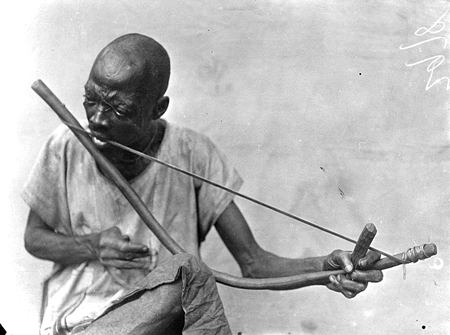
The zeze, also known as izeze, tzetze, or dzendze (plural: mazeze) is a bowed spike fiddle of the Gogo (Wagogo) people of the Dodoma Region of central Tanzania. It has between one and 14 strings that are made of steel wire or plant fiber, and can be played with a convex bow made of wood and baobab fiber. The number of strings affects how the instrument is played, instruments with fewer strings are generally bowed, while the other with more strings can be bowed or plucked. It can be performed alone, with singers, or as part of a larger ensemble, and can be played at ceremonies, festivals, community gatherings or just for fun.
Other bar zithers



Frequently asked questions
What does a zeze sound like?
As one of the bar zithers, its sound comes from the way strings are stretched along a rigid bar or stick, often with a gourd resonator.
What type of instrument is the zeze?
It is classified as bar zithers (Hornbostel–Sachs 311.221).
Sources & credits
- Wikidata Q8069980 – CC0
- Wikipedia: Zeze (instrument) – CC BY-SA 4.0
- Image by Charming lifetouch – CC BY-SA 4.0