How the clavinet makes its sound
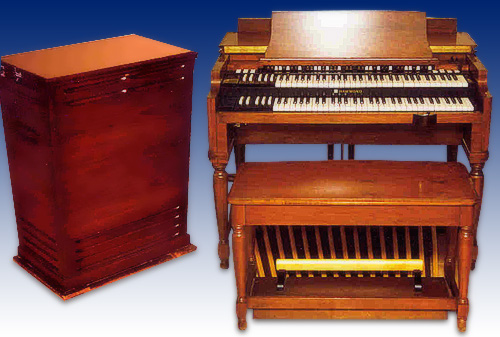
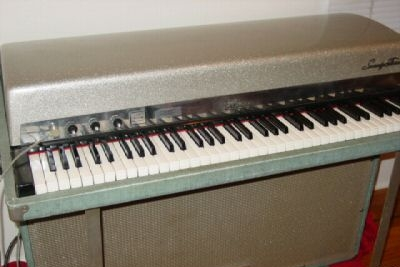
In the Hornbostel–Sachs system, which classifies instruments by how they produce sound, the clavinet belongs to the electrophones: sound is produced or shaped electronically – synthesizers, the theremin and electric organs.
Press play above and watch the spectrum: the evenly spaced peaks are harmonics, and their relative strength is what gives the instrument its character.
From Wikipedia
The Clavinet is an electric clavichord invented by Ernst Zacharias and manufactured by the Hohner company of Trossingen, West Germany, from 1964 to 1982. The instrument produces sounds with rubber pads, each matching one of the keys and responding to a keystroke by striking a given point on a tensioned string, and was designed to resemble the Renaissance-era clavichord.
Although originally intended for home use, the Clavinet became popular on stage, and could be used to create electric guitar sounds on a keyboard. It is strongly associated with the musician Stevie Wonder, who used the instrument extensively, particularly on his 1972 hit "Superstition", and was regularly featured in rock, funk and reggae music throughout the 1960s and 1970s. Modern digital keyboards can emulate the Clavinet sound, but there is also a grass-roots industry of repairers who continue to maintain the instrument.
Other electrophones




Frequently asked questions
What does a clavinet sound like?
As one of the electrophones, its sound comes from the way sound is produced or shaped electronically.
What type of instrument is the clavinet?
It is classified as electrophones (Hornbostel–Sachs 513).