How the MIDI controller makes its sound
In the Hornbostel–Sachs system, which classifies instruments by how they produce sound, the MIDI controller belongs to the electrophones: sound is produced or shaped electronically – synthesizers, the theremin and electric organs.
Players shape its sound through technique and materials; the resonating body filters the raw vibration, boosting some harmonics and damping others.
From Wikipedia
A MIDI controller is an input device and electronic musical instrument which typically converts physical interaction to Musical Instrument Digital Interface (MIDI) information. This information can be sent to a sound module, synthesizer, or sampler, or can be recorded using a music sequencer or digital audio workstation for later playback. A MIDI controller may or may not have a synthesizer or speaker built in, and most rely on external equipment to convert MIDI events into an audio signal and then into audible sound.
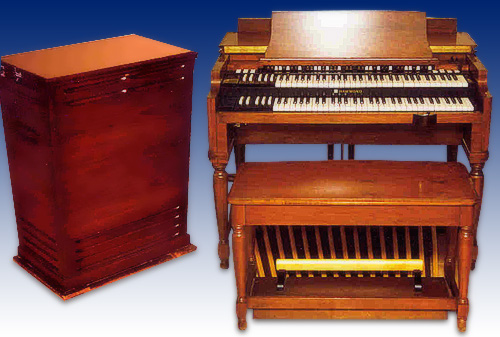
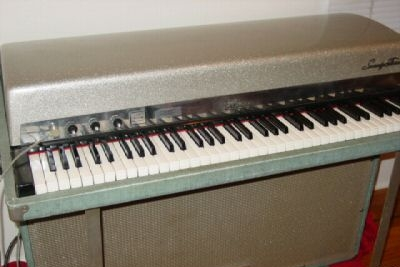
Other electrophones




Questions people ask
Real questions from the Stack Exchange community – follow a link to read the discussion.
- Using keyboard/MIDI controller to learn piano · Music SE
- USB/Midi controller on Ubuntu Linux? · Sound Design SE
- Live control of rewired application parameter using MIDI controller in Ableton · Sound Design SE
- Is there software to capture and view raw MIDI data coming from a controller? · Sound Design SE
- Using an Electronic Drum Kit as a MIDI controller · Sound Design SE
Frequently asked questions
What does the MIDI controller sound like?
As one of the electrophones, its sound comes from the way sound is produced or shaped electronically.
What type of instrument is the MIDI controller?
It is classified as electrophones (Hornbostel–Sachs 542).
Sources & credits
- Wikidata Q669610 – CC0
- Wikipedia: MIDI controller – CC BY-SA 4.0
- Image by Gerald Moore – CC BY 2.0