How the Neo-Bechstein makes its sound
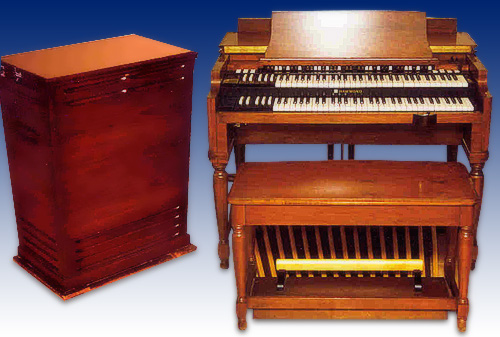
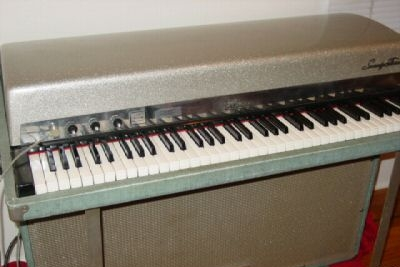
In the Hornbostel–Sachs system, which classifies instruments by how they produce sound, the Neo-Bechstein belongs to the electrophones: sound is produced or shaped electronically – synthesizers, the theremin and electric organs.
Press play above and watch the spectrum: the evenly spaced peaks are harmonics, and their relative strength is what gives the instrument its character.
From Wikipedia
Neo-Bechstein or Bechstein-Siemens-Nernst-Flügel were a set of electric grand pianos that were primarily built by Walther Nernst in the 1930s. Improvising upon an electrical prototype by Oskar Vierling, the design was executed around 1922, and the first of the set was marketed in 1931 to critical acclaim. The mechanics of the piano were implemented by the C. Bechstein company and the valve electronics were created by Siemens & Halske. The design belonged to a newer generation of electric pianos that eliminated the presence of any sound board.
Other electrophones




Frequently asked questions
What does the Neo-Bechstein sound like?
As one of the electrophones, its sound comes from the way sound is produced or shaped electronically.
What type of instrument is the Neo-Bechstein?
It is classified as electrophones (Hornbostel–Sachs 513).
Sources & credits
- Wikidata Q186496 – CC0
- Wikipedia: Neo-Bechstein – CC BY-SA 4.0
- Image by KarlKunde – CC BY-SA 3.0