How the ring modulator makes its sound
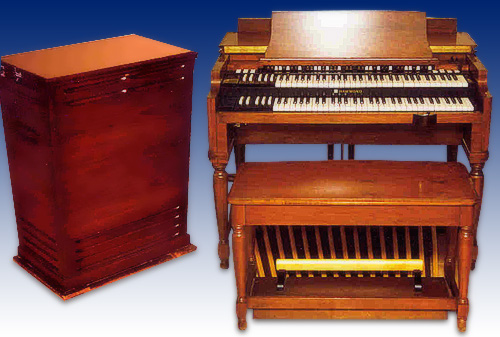
In the Hornbostel–Sachs system, which classifies instruments by how they produce sound, the ring modulator belongs to the electrophones: sound is produced or shaped electronically – synthesizers, the theremin and electric organs.
Its timbre – the colour that lets you tell it apart from other instruments playing the same note – comes from the mix of overtones its body and resonator emphasise.
From Wikipedia
In electronics, ring modulation is a signal processing function, an implementation of frequency mixing, in which two signals are combined to yield an output signal. One signal, called the carrier, is typically a sine wave or another simple waveform; the other signal is typically more complicated and is called the input or the modulator signal.
The ring modulator takes its name from the original implementation in which the analog circuit of diodes takes the shape of a ring: a diode ring. The circuit is similar to a bridge rectifier, except that all four diodes are polarized in the same direction.
Other electrophones





Frequently asked questions
What does a ring modulator sound like?
As one of the electrophones, its sound comes from the way sound is produced or shaped electronically.
What type of instrument is the ring modulator?
It is classified as electrophones (Hornbostel–Sachs 533.11).
Sources & credits
- Wikidata Q25000099 – CC0
- Wikipedia: Ring modulation – CC BY-SA 4.0
- Image by No machine-readable author provided. Gablin assumed (based on copyright claims). – CC BY 2.5