How the Wurlitzer electronic piano makes its sound
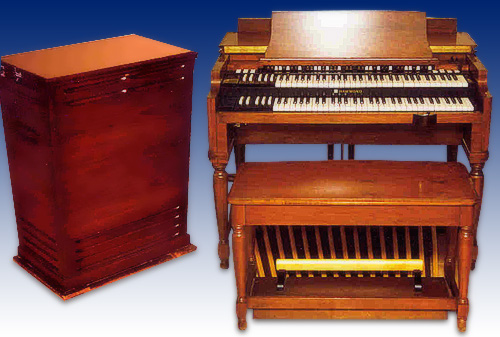
In the Hornbostel–Sachs system, which classifies instruments by how they produce sound, the Wurlitzer electronic piano belongs to the electrophones: sound is produced or shaped electronically – synthesizers, the theremin and electric organs.
Players shape its sound through technique and materials; the resonating body filters the raw vibration, boosting some harmonics and damping others.
From Wikipedia
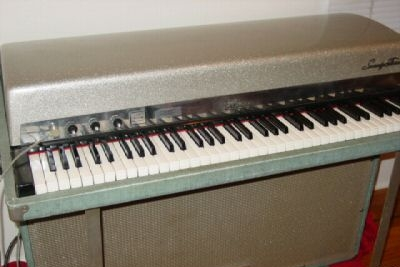
The Wurlitzer electronic piano is an electric piano manufactured and marketed by Wurlitzer from 1954 to 1983. Though marketed as electronic, sound is generated by striking a metal reed with a hammer, which induces an electric current in a pickup. It is conceptually similar to the Rhodes piano, though the sound is different.
The instrument was invented by Benjamin Miessner, who had worked on various types of electric pianos since the early 1930s. The first Wurlitzer was manufactured in 1954, and production continued until 1983. Originally, the piano was designed to be used in the classroom, and several dedicated teacher and student instruments were manufactured. It was adapted for more conventional live performances, including stage models with attachable legs and console models with built-in frames. The stage instrument was used by several popular artists, including Ray Charles, Joe Zawinul and Supertramp. Several electronic keyboards include an emulation of the Wurlitzer.
Other electrophones




Frequently asked questions
What does the Wurlitzer electronic piano sound like?
As one of the electrophones, its sound comes from the way sound is produced or shaped electronically.
What type of instrument is the Wurlitzer electronic piano?
It is classified as electrophones (Hornbostel–Sachs 511).
Sources & credits
- Wikidata Q1759986 – CC0
- Wikipedia: Wurlitzer electronic piano – CC BY-SA 4.0
- Image by Fetz at German Wikipedia – Public domain