Listen to the Yamaha DX7
Tip: press play to see the sound's live frequency spectrum in blue over the waveform.
How the Yamaha DX7 makes its sound
In the Hornbostel–Sachs system, which classifies instruments by how they produce sound, the Yamaha DX7 belongs to the electrophones: sound is produced or shaped electronically – synthesizers, the theremin and electric organs.
Press play above and watch the spectrum: the evenly spaced peaks are harmonics, and their relative strength is what gives the instrument its character.
From Wikipedia
The Yamaha DX7 is a synthesizer introduced by Yamaha Corporation in 1983. It was the first successful digital synthesizer and is one of the best-selling synthesizers in history, selling more than 200,000 units.
In the early 1980s, the synthesizer market was dominated by analog synthesizers. Frequency modulation synthesis, a means of generating sounds via frequency modulation (FM), was developed by John Chowning at Stanford University, California. FM synthesis created brighter, glassier sounds, and could better imitate acoustic sounds such as brass and bells. Yamaha licensed the technology to create the DX7, combining it with very-large-scale integration chips to lower manufacturing costs.
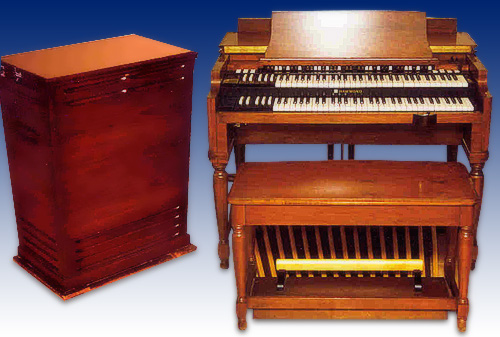
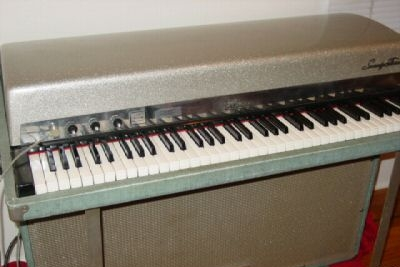
Other electrophones




Questions people ask
Real questions from the Stack Exchange community – follow a link to read the discussion.
- How does the Yamaha DX7 digital analog converter work? · Electronics SE
Frequently asked questions
What does the Yamaha DX7 sound like?
Listen to 1 recording on this page. As one of the electrophones, its sound comes from the way sound is produced or shaped electronically.
What type of instrument is the Yamaha DX7?
It is classified as electrophones (Hornbostel–Sachs 541.12).
Sources & credits
- Korg Volca fm 2 - Demo using Yamaha DX7 presets by Attosaur – CC BY-SA 4.0 · Wikimedia Commons
- Wikidata Q139300 – CC0
- Wikipedia: Yamaha DX7 – CC BY-SA 4.0
- Image by Yamaha DX7.jpg : Leo-setä Yamaha DX7 Table 4 f.jpg : iixorbiusii and Georgfotoart derivative work: Pittigrilli – CC BY 4.0