How the đàn tranh makes its sound
In the Hornbostel–Sachs system, which classifies instruments by how they produce sound, the đàn tranh belongs to the tube zithers: strings run along the surface of a tube, such as a length of bamboo.
More broadly it is one of the chordophones (string instruments), where sound comes from vibrating strings, amplified by a resonating body.
Its timbre – the colour that lets you tell it apart from other instruments playing the same note – comes from the mix of overtones its body and resonator emphasise.
From Wikipedia
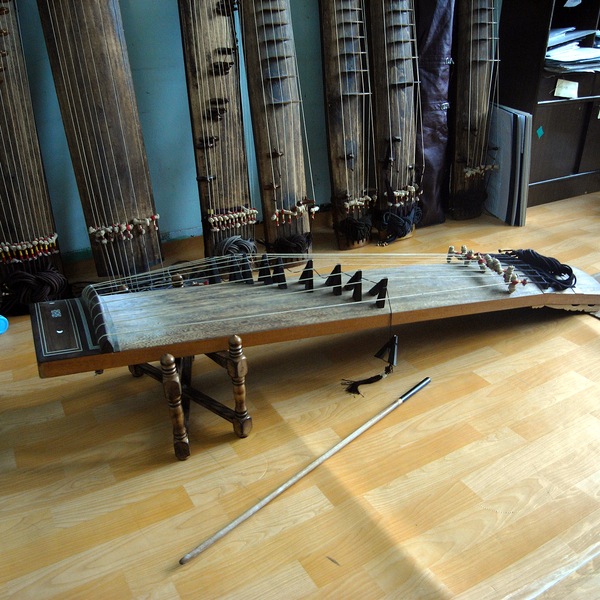
The đàn tranh or đàn thập lục is a plucked zither of Vietnam, based on the Chinese guzheng, from which are also derived the Japanese koto, the Korean gayageum and ajaeng, the Mongolian yatga, the Sundanese kacapi and the Kazakh jetigen. It has a long soundbox with the steel strings, movable bridges and tuning pegs positioned on its top.
The đàn tranh can be used either as a solo instrument, as part of various instrumental ensembles or to accompany vocal performances.
Other tube zithers



Frequently asked questions
What does a đàn tranh sound like?
As one of the tube zithers, its sound comes from the way strings run along the surface of a tube, such as a length of bamboo.
What type of instrument is the đàn tranh?
It is classified as tube zithers (Hornbostel–Sachs 312.22).
Sources & credits
- Wikidata Q342234 – CC0
- Wikipedia: Đàn tranh – CC BY-SA 4.0
- Image by No machine-readable author provided. Macula Lutea~commonswiki assumed (based on copyright claims). – Public domain