Listen to the veena
Tip: press play to see the sound's live frequency spectrum in blue over the waveform.
How the veena makes its sound
In the Hornbostel–Sachs system, which classifies instruments by how they produce sound, the veena belongs to the tube zithers: strings run along the surface of a tube, such as a length of bamboo.
More broadly it is one of the chordophones (string instruments), where sound comes from vibrating strings, amplified by a resonating body.
Its timbre – the colour that lets you tell it apart from other instruments playing the same note – comes from the mix of overtones its body and resonator emphasise.
From Wikipedia
The veena, also spelled vina (Sanskrit: वीणा IAST: vīṇā), is any of various chordophone instruments from the Indian subcontinent. Ancient musical instruments evolved into many variations, such as lutes, zithers and arched harps. The many regional designs have different names such as the Rudra veena, the Saraswati veena, the Vichitra veena and others.
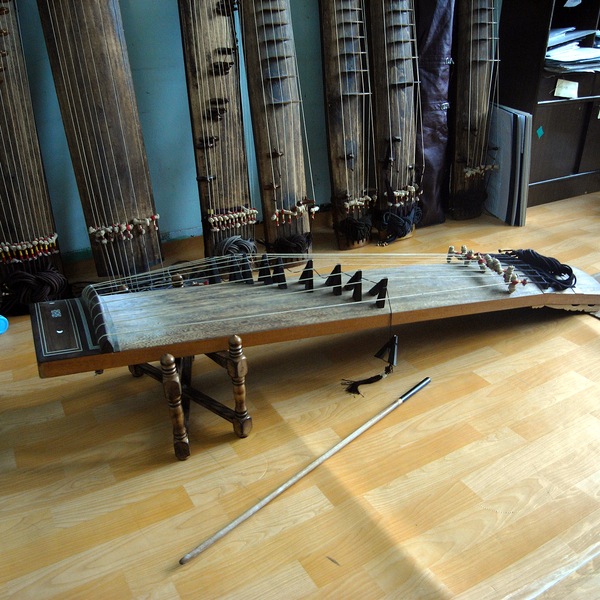
Other tube zithers




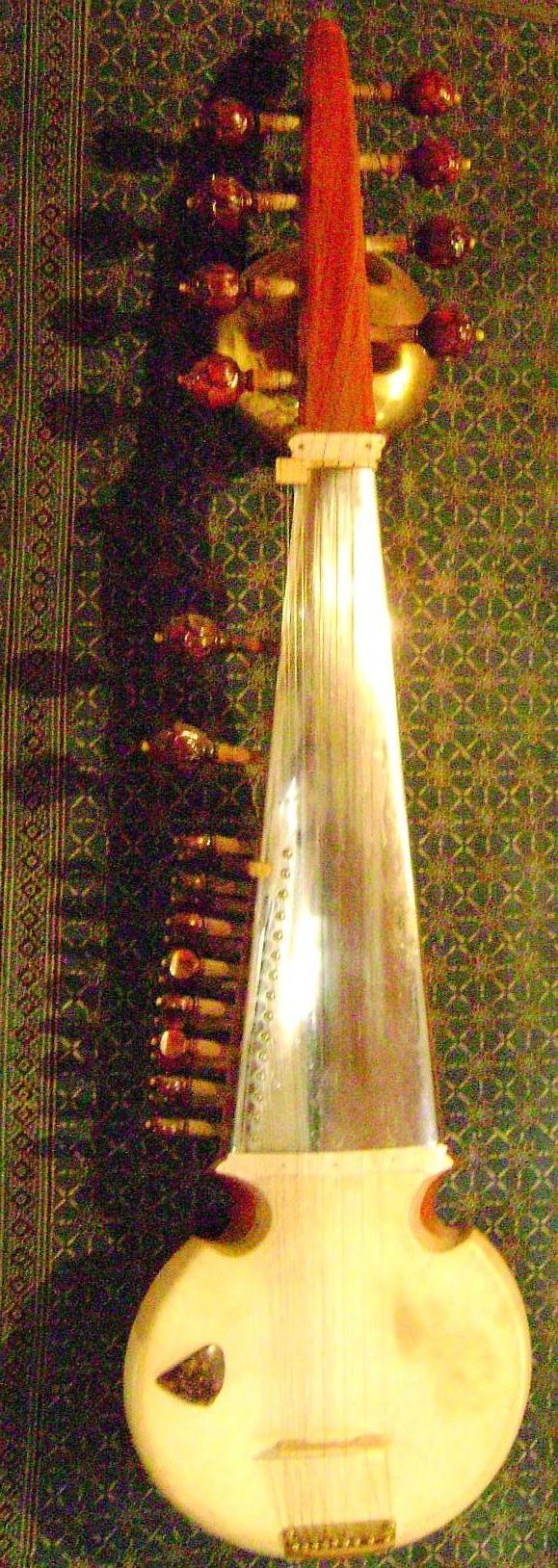
More instruments from India




Frequently asked questions
What does a veena sound like?
Listen to 2 recordings on this page. As one of the tube zithers, its sound comes from the way strings run along the surface of a tube, such as a length of bamboo.
What type of instrument is the veena?
It is classified as tube zithers (Hornbostel–Sachs 312.322).
Where does the veena come from?
The veena originates from India.
Sources & credits
- Veena and Sitar (Antti Luode) by Antti Luode – CC BY 3.0 · Wikimedia Commons
- Veena And Shenai (Antti Luode) by Antti Luode – CC BY 3.0 · Wikimedia Commons
- Wikidata Q959769 – CC0
- Wikipedia: Veena – CC BY-SA 4.0
- Image by File:Black and White Icon of Lady playing Indian instrument Veena.png : Art Projects MKCL KF derivative work: Jerimee – CC BY-SA 4.0