How the geomungo makes its sound
In the Hornbostel–Sachs system, which classifies instruments by how they produce sound, the geomungo belongs to the tube zithers: strings run along the surface of a tube, such as a length of bamboo.
More broadly it is one of the chordophones (string instruments), where sound comes from vibrating strings, amplified by a resonating body.
Press play above and watch the spectrum: the evenly spaced peaks are harmonics, and their relative strength is what gives the instrument its character.
From Wikipedia
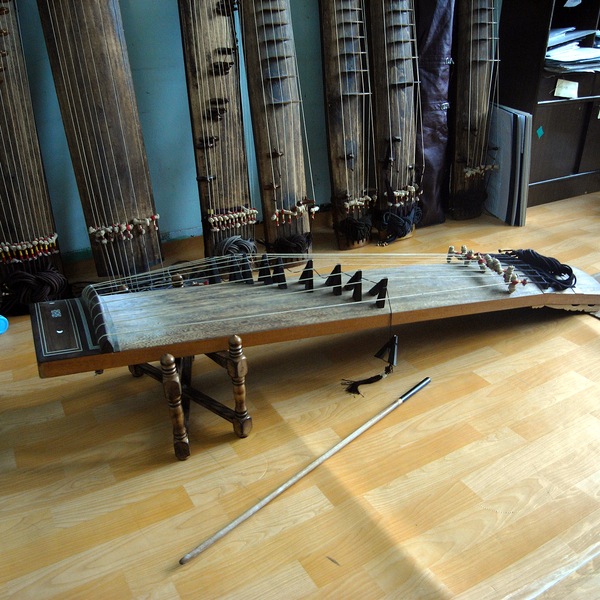
The geomungo, alternate name hyeongeum, is a traditional Korean plucked zither with both bridges and frets. Geomungo is a representative stringed instrument made in Goguryeo before the 5th century. Scholars believe that the name refers to Goguryeo and translates to "Goguryeo zither" or that it refers to the colour and translates to "black crane zither" (현학금; 玄鶴琴; hyeonhakgeum).
The geomungo's place in Korean culture is traditionally that of a scholars' instrument for self-cultivation, much like ancient Chinese had done with the guqin in China. However, the Koreans never adopted the guqin as a folk instrument but instead inherited the Confucian and literati guqin lore wholesale and applied it onto their own geomungo lore.
Other tube zithers



Frequently asked questions
What does a geomungo sound like?
As one of the tube zithers, its sound comes from the way strings run along the surface of a tube, such as a length of bamboo.
What type of instrument is the geomungo?
It is classified as tube zithers (Hornbostel–Sachs 312.22).
Sources & credits
- Wikidata Q713298 – CC0
- Wikipedia: Geomungo – CC BY-SA 4.0
- Image by ko:사용자:김준민 – CC BY-SA 3.0