How the tassa makes its sound
In the Hornbostel–Sachs system, which classifies instruments by how they produce sound, the tassa belongs to the idiophones: the solid body of the instrument itself vibrates, without strings or a stretched membrane.
Press play above and watch the spectrum: the evenly spaced peaks are harmonics, and their relative strength is what gives the instrument its character.
From Wikipedia
In Trinidad and Tobago, and other parts of the Caribbean, the term tassa refers to a drumming ensemble drawn from an amalgamation of various North Indian folk drumming traditions, most importantly dhol-tasha, a style that remains popular today in many parts of India and Pakistan. Beginning in the 1830s and lasting until 1918, dhol-tasha was taken around the world by Indian workers, mostly from present-day Bihar and Uttar Pradesh, enmeshed in a global scheme of indentured labor in British, French, and Dutch territories.
Other idiophones


More instruments from India


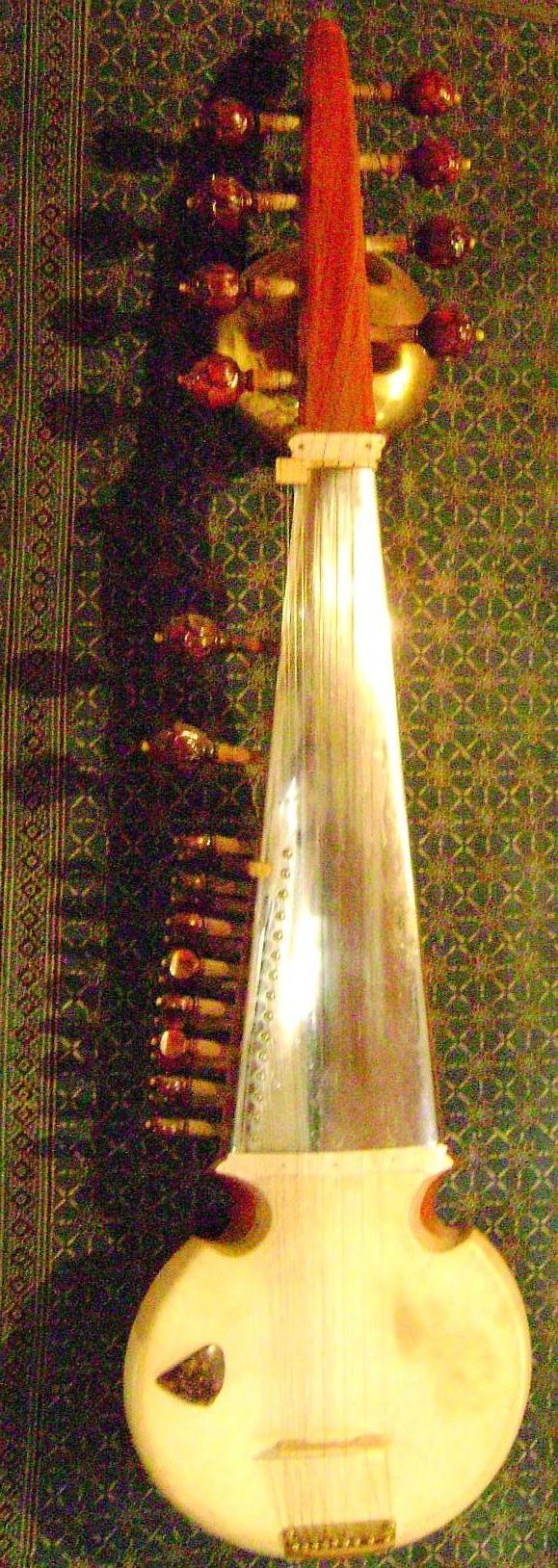

Frequently asked questions
What does a tassa sound like?
As one of the idiophones, its sound comes from the way the solid body of the instrument itself vibrates, without strings or a stretched membrane.
What type of instrument is the tassa?
It is classified as idiophones (Hornbostel–Sachs 1012.2413).
Where does the tassa come from?
The tassa originates from India.
Sources & credits
- Wikidata Q7687617 – CC0
- Wikipedia: Tassa – CC BY-SA 4.0
- Image by Chrisbal – CC BY-SA 4.0