How the tube zither makes its sound
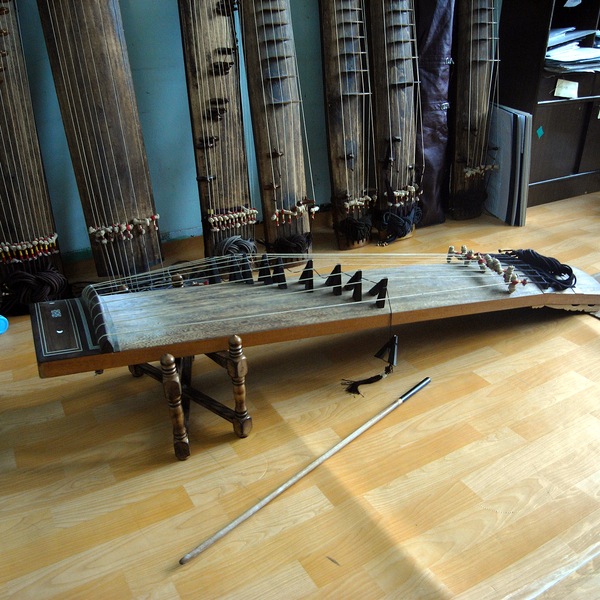
In the Hornbostel–Sachs system, which classifies instruments by how they produce sound, the tube zither belongs to the tube zithers: strings run along the surface of a tube, such as a length of bamboo.
More broadly it is one of the chordophones (string instruments), where sound comes from vibrating strings, amplified by a resonating body.
Players shape its sound through technique and materials; the resonating body filters the raw vibration, boosting some harmonics and damping others.
From Wikipedia
The tube zither is a stringed musical instrument in which a tube functions both as an instrument's neck and its soundbox. As the neck, it holds strings taut and allows them to vibrate. As a soundbox, it modifies the sound and transfers it to the open air. The instruments are among the oldest of chordophones, being "a very early stage" in the development of chordophones, and predate some of the oldest chordophones, such as the Chinese Se, zithers built on a tube split in half. Most tube zithers are made of bamboo, played today in Madagascar, India, Southeast Asia and Taiwan. Tube zithers made from other materials have been found in Europe and the United States, made from materials such as cornstalks and cactus.
There are both round and half tube zithers, as well as tube zithers with the strings cut out of the bamboo body, idiochordic, or, rarely, have separate strings, heterochordic.
Other tube zithers



Frequently asked questions
What does a tube zither sound like?
As one of the tube zithers, its sound comes from the way strings run along the surface of a tube, such as a length of bamboo.
What type of instrument is the tube zither?
It is classified as tube zithers (Hornbostel–Sachs 312).
Sources & credits
- Wikidata Q30034781 – CC0
- Wikipedia: Tube zither – CC BY-SA 4.0
- Image by Gary Todd – CC0 1.0