How the cor anglais makes its sound
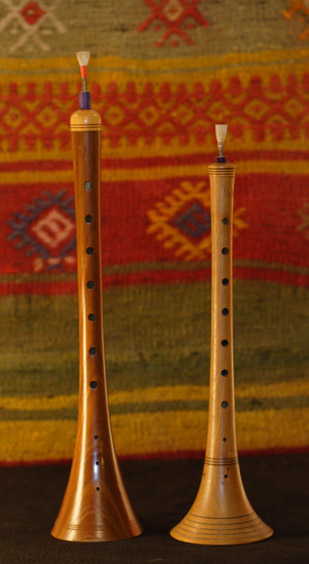
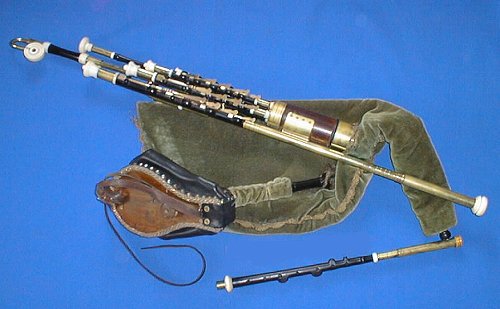
In the Hornbostel–Sachs system, which classifies instruments by how they produce sound, the cor anglais belongs to the double-reed instruments: two reeds beat against each other – oboes, bassoons, shawms and the duduk.
More broadly it is one of the aerophones (wind instruments), where sound comes from vibrating air.
Press play above and watch the spectrum: the evenly spaced peaks are harmonics, and their relative strength is what gives the instrument its character.
From Wikipedia
The cor anglais, or English horn (mainly North America), is a double-reed woodwind instrument in the oboe family. It is approximately one and a half times the length of an oboe, making it essentially an alto oboe in F.
The cor anglais is a transposing instrument pitched in F, a perfect fifth lower than the oboe (a C instrument). This means that music for the cor anglais is written a perfect fifth higher than the instrument sounds. The fingering and playing technique used for the cor anglais are essentially the same as those of the oboe, and oboists typically double on the cor anglais when required. The cor anglais normally lacks the lowest B♭ key found on most oboes, and so its sounding range stretches from E3 (written B♮) below middle C to C6 two octaves above middle C. Some versions have a Low B♭ key to extend the range down one more note to sounding E♭3.
Other double-reed instruments




Frequently asked questions
What does a cor anglais sound like?
As one of the double-reed instruments, its sound comes from the way two reeds beat against each other.
What type of instrument is the cor anglais?
It is classified as double-reed instruments (Hornbostel–Sachs 422.112-71).
Sources & credits
- Wikidata Q185041 – CC0
- Wikipedia: Cor anglais – CC BY-SA 4.0
- Image by Hustvedt – CC BY-SA 3.0