Listen to the oboe
Tip: press play to see the sound's live frequency spectrum in blue over the waveform.
How the oboe makes its sound
In the Hornbostel–Sachs system, which classifies instruments by how they produce sound, the oboe belongs to the double-reed instruments: two reeds beat against each other – oboes, bassoons, shawms and the duduk.
More broadly it is one of the aerophones (wind instruments), where sound comes from vibrating air.
Its timbre – the colour that lets you tell it apart from other instruments playing the same note – comes from the mix of overtones its body and resonator emphasise.
Range of the oboe
The typical range of the oboe runs from B♭3 (233.1 Hz) to A6 (1,760 Hz) – about 2.9 octaves. Harmonics extend its sound far higher.
From Wikipedia
The oboe ( OH-boh) is a type of double-reed woodwind instrument. Oboes are usually made of wood, but may also be made of synthetic materials, such as plastic, resin, or hybrid composites.
The most common type of oboe, the soprano oboe pitched in C, measures roughly 65 cm (25+1⁄2 in) long and has metal keys, a conical bore and a flared bell. Sound is produced by blowing into the reed at a sufficient air pressure, causing it to vibrate with the air column. The distinctive tone is versatile and has been described as "bright". When the word oboe is used alone, it is generally taken to mean the soprano member rather than other instruments of the family, such as the bass oboe, the cor anglais (English horn), or oboe d'amore.
Other double-reed instruments


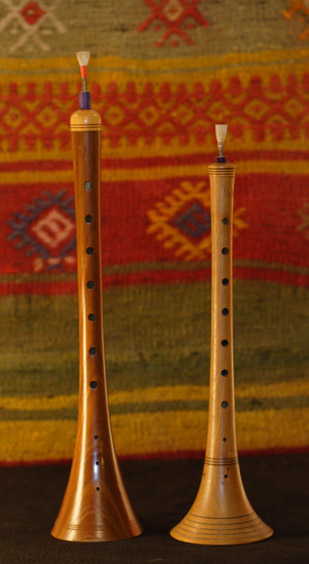


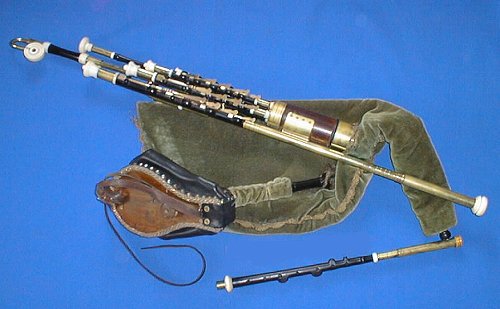
Questions people ask
Real questions from the Stack Exchange community – follow a link to read the discussion.
Frequently asked questions
What does an oboe sound like?
Listen to 5 recordings on this page. As one of the double-reed instruments, its sound comes from the way two reeds beat against each other.
What type of instrument is the oboe?
It is classified as double-reed instruments (Hornbostel–Sachs 422.112-71).
Sources & credits
- Ferling Oboe Study No 28 Aaron Hill by Aaron Hill Oboe / Franz Wilhelm Ferling (1796–1874) Bearbeitung (Video entfernt): Lewenstein – Public domain · Wikimedia Commons
- J.S.Bach from Cantata BWV80 "Ein' feste Burg ist unser Gott", Aria for soprano with oboe… by J.S.Bach – Public domain · Wikimedia Commons
- Oboe 03 R by Mozart – CC0 1.0 · Wikimedia Commons
- Oboe 03 L by Mozart – CC0 1.0 · Wikimedia Commons
- Piano And Oboe (Antti Luode) by Antti Luode – CC BY 3.0 · Wikimedia Commons
- Wikidata Q8377 – CC0
- Wikipedia: Oboe – CC BY-SA 4.0
- Image by Gebrüder Mönnig, Markneukirchen – CC BY-SA 4.0