Listen to the duduk
Tip: press play to see the sound's live frequency spectrum in blue over the waveform.
How the duduk makes its sound
In the Hornbostel–Sachs system, which classifies instruments by how they produce sound, the duduk belongs to the double-reed instruments: two reeds beat against each other – oboes, bassoons, shawms and the duduk.
More broadly it is one of the aerophones (wind instruments), where sound comes from vibrating air.
Players shape its sound through technique and materials; the resonating body filters the raw vibration, boosting some harmonics and damping others.
From Wikipedia
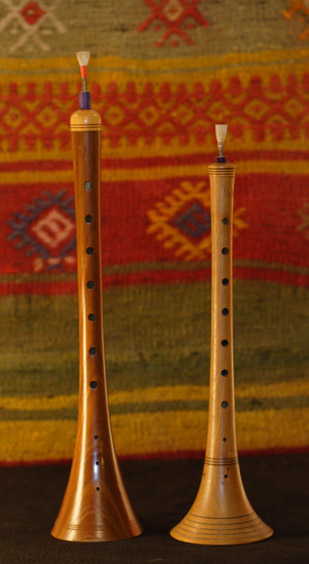
The Armenian duduk or Tsiranapogh (Armenian: ծիրանափող, meaning "apricot-made wind instrument"), is a double reed woodwind instrument made of apricot wood originating from Armenia. Variations of the Armenian duduk appear throughout the Caucasus, the Balkans, and the Middle East. The duduk, balaban and mey are almost identical, except for historical and geographical differences.
It is commonly played in pairs: while the first player plays the melody, the second plays a steady drone called dum, and the sound of the two instruments together creates a richer, more haunting sound. The unflattened reed and cylindrical body produce a sound closer to the English horn than the oboe or bassoon. Unlike other double reed instruments like the oboe or shawm, the duduk has a very large reed proportional to its size.
Other double-reed instruments




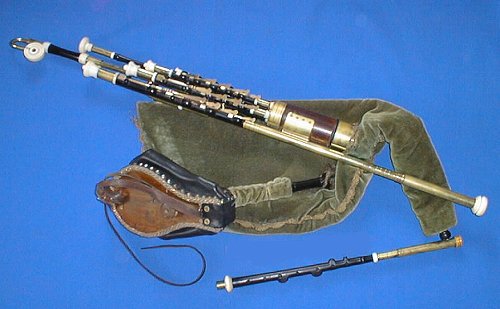
Frequently asked questions
What does a duduk sound like?
Listen to 2 recordings on this page. As one of the double-reed instruments, its sound comes from the way two reeds beat against each other.
What type of instrument is the duduk?
It is classified as double-reed instruments (Hornbostel–Sachs 422.111).
Where does the duduk come from?
The duduk originates from Armenia.
Sources & credits
- SERGO.TEL - April - duduk-improvisation2 by SERGO.TEL – CC BY 3.0 · Wikimedia Commons
- Duduk Music by Ikuzusotnek – CC BY-SA 4.0 · Wikimedia Commons
- Wikidata Q737917 – CC0
- Wikipedia: Duduk – CC BY-SA 4.0
- Image by No machine-readable author provided. Arent assumed (based on copyright claims). – CC BY-SA 3.0