How the friction idiophone makes its sound
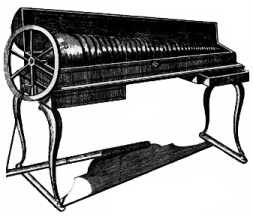
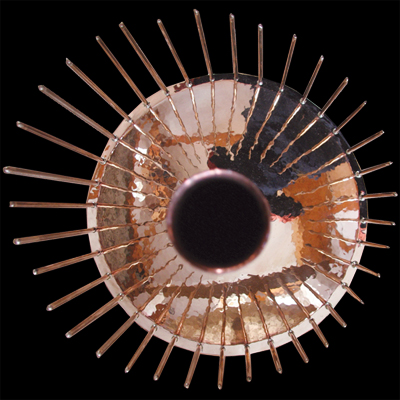
In the Hornbostel–Sachs system, which classifies instruments by how they produce sound, the friction idiophone belongs to the friction idiophones: the body is rubbed – the glass harmonica, singing bowls and the musical saw.
More broadly it is one of the idiophones, where the solid body of the instrument itself vibrates, without strings or a stretched membrane.
Press play above and watch the spectrum: the evenly spaced peaks are harmonics, and their relative strength is what gives the instrument its character.
From Wikipedia
Friction idiophones is designation 13 in the Hornbostel-Sachs system of musical instrument classification. These idiophones produce sound by being rubbed either against each other or by means of a non-sounding object. Instruments of this type are not very common; possibly the best known examples are the musical saw and the nail violin.
According to musicologist Curt Sachs:... It is essential to distinguish between rubbing and scraping. The latter results in a series of beats cause by passing a stick over a notched surface; [whereas] friction is based on adhesion....On a higher level we find...the glass harmonica.
Other friction idiophones




Frequently asked questions
What does a friction idiophone sound like?
As one of the friction idiophones, its sound comes from the way the body is rubbed.
What type of instrument is the friction idiophone?
It is classified as friction idiophones (Hornbostel–Sachs 13).
Sources & credits
- Wikidata Q5503427 – CC0
- Wikipedia: Friction idiophone – CC BY-SA 4.0
- Image by nl:Gebruiker:Pijnack – CC BY-SA 3.0