How the waterphone makes its sound
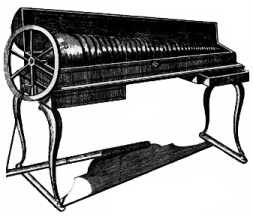
In the Hornbostel–Sachs system, which classifies instruments by how they produce sound, the waterphone belongs to the friction idiophones: the body is rubbed – the glass harmonica, singing bowls and the musical saw.
More broadly it is one of the idiophones, where the solid body of the instrument itself vibrates, without strings or a stretched membrane.
Press play above and watch the spectrum: the evenly spaced peaks are harmonics, and their relative strength is what gives the instrument its character.
From Wikipedia
A waterphone (also ocean harp) is a type of inharmonic acoustic tuned idiophone consisting of a stainless steel resonator bowl or pan with a cylindrical neck and bronze rods of different lengths and diameters around the rim of the bowl. The resonator may contain a small amount of water giving the waterphone a vibrant ethereal sound that has appeared in movie soundtracks, record albums, and live performances. The instrument was invented, developed, and manufactured by American Richard Waters (1935–2013).
Other friction idiophones


Frequently asked questions
What does a waterphone sound like?
As one of the friction idiophones, its sound comes from the way the body is rubbed.
What type of instrument is the waterphone?
It is classified as friction idiophones (Hornbostel–Sachs 13).
Sources & credits
- Wikidata Q1471374 – CC0
- Wikipedia: Waterphone – CC BY-SA 4.0
- Image by Hangklang – CC BY-SA 3.0