How the nail violin makes its sound
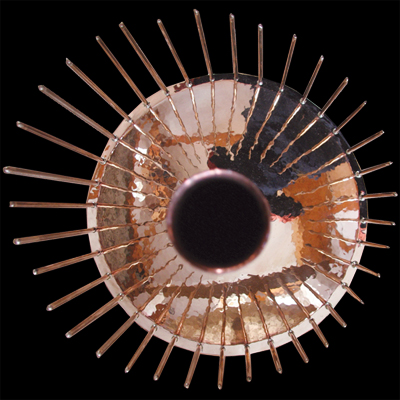
In the Hornbostel–Sachs system, which classifies instruments by how they produce sound, the nail violin belongs to the friction idiophones: the body is rubbed – the glass harmonica, singing bowls and the musical saw.
More broadly it is one of the idiophones, where the solid body of the instrument itself vibrates, without strings or a stretched membrane.
Its timbre – the colour that lets you tell it apart from other instruments playing the same note – comes from the mix of overtones its body and resonator emphasise.
From Wikipedia
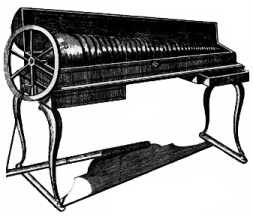
The nail violin is a musical instrument that consists of a semicircular wooden soundboard, with nails of various lengths arranged to produce a chromatic scale when a bow is drawn across them. It was invented in 1740 by German violinist Johann Wilde.
Other friction idiophones




Frequently asked questions
What does a nail violin sound like?
As one of the friction idiophones, its sound comes from the way the body is rubbed.
What type of instrument is the nail violin?
It is classified as friction idiophones (Hornbostel–Sachs 131.21).
Sources & credits
- Wikidata Q953846 – CC0
- Wikipedia: Nail violin – CC BY-SA 4.0
- Image by Bertramz – CC BY-SA 3.0