How the glass harmonica makes its sound
In the Hornbostel–Sachs system, which classifies instruments by how they produce sound, the glass harmonica belongs to the friction idiophones: the body is rubbed – the glass harmonica, singing bowls and the musical saw.
More broadly it is one of the idiophones, where the solid body of the instrument itself vibrates, without strings or a stretched membrane.
Its timbre – the colour that lets you tell it apart from other instruments playing the same note – comes from the mix of overtones its body and resonator emphasise.
From Wikipedia
The glass harmonica, also known as the glass armonica, glass harmonium, bowl organ, hydrocrystalophone, or simply the armonica or harmonica is a type of musical instrument that uses a series of glass bowls or goblets graduated in size to produce musical tones by means of friction (instruments of this type are known as friction idiophones). It was invented in 1761 by Benjamin Franklin and produces sound that is ethereal and haunting, with a flute-like tone that can hold long notes.
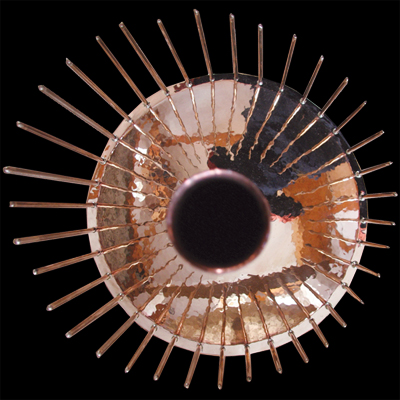
Other friction idiophones




Frequently asked questions
What does a glass harmonica sound like?
As one of the friction idiophones, its sound comes from the way the body is rubbed.
What type of instrument is the glass harmonica?
It is classified as friction idiophones (Hornbostel–Sachs 133.2).
Sources & credits
- Wikidata Q917571 – CC0
- Wikipedia: Glass harmonica – CC BY-SA 4.0
- Image by unknown [? - someone hired by B.F.] – Public domain