Listen to the musical saw
Tip: press play to see the sound's live frequency spectrum in blue over the waveform.
How the musical saw makes its sound
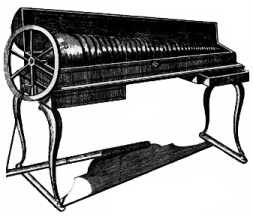
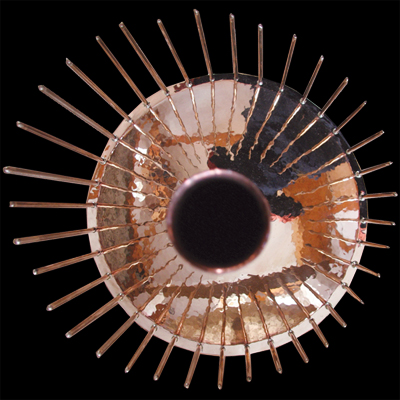
In the Hornbostel–Sachs system, which classifies instruments by how they produce sound, the musical saw belongs to the friction idiophones: the body is rubbed – the glass harmonica, singing bowls and the musical saw.
More broadly it is one of the idiophones, where the solid body of the instrument itself vibrates, without strings or a stretched membrane.
Press play above and watch the spectrum: the evenly spaced peaks are harmonics, and their relative strength is what gives the instrument its character.
From Wikipedia
A musical saw, also called a singing saw, is a hand saw used as a musical instrument. Capable of continuous glissando (portamento), the sound creates an ethereal tone, very similar to the theremin. The musical saw is classified as a plaque friction idiophone with direct friction (132.1) under the Hornbostel-Sachs system of musical instrument classification and as a metal sheet played by friction (151) under the revision of the Hornbostel-Sachs classification by the MIMO Consortium.
Other friction idiophones




Frequently asked questions
What does a musical saw sound like?
Listen to 1 recording on this page. As one of the friction idiophones, its sound comes from the way the body is rubbed.
What type of instrument is the musical saw?
It is classified as friction idiophones (Hornbostel–Sachs 131.22).
Sources & credits
- Zaagfragment by Original uploader was Pijnack at nl.wikipedia – CC BY-SA 3.0 · Wikimedia Commons
- Wikidata Q1144761 – CC0
- Wikipedia: Musical saw – CC BY-SA 4.0
- Image by Pietrofesta – CC BY-SA 4.0