How the great Highland bagpipe makes its sound
In the Hornbostel–Sachs system, which classifies instruments by how they produce sound, the great Highland bagpipe belongs to the double-reed instruments: two reeds beat against each other – oboes, bassoons, shawms and the duduk.
More broadly it is one of the aerophones (wind instruments), where sound comes from vibrating air.
Press play above and watch the spectrum: the evenly spaced peaks are harmonics, and their relative strength is what gives the instrument its character.
From Wikipedia
The great Highland bagpipe is a type of bagpipe native to Scotland, and the Scottish analogue to the great Irish warpipes. It has acquired widespread recognition through its usage in the British military and in pipe bands throughout the world.
The bagpipe of any kind is first attested in Scotland around 1400. The earliest references to bagpipes in Scotland are in a military context, and it is in that context that the great Highland bagpipe became established in the British military and achieved the widespread prominence it enjoys today, whereas other bagpipe traditions throughout Europe, ranging from Portugal to Russia, almost universally went into decline by the late 19th and early 20th century.
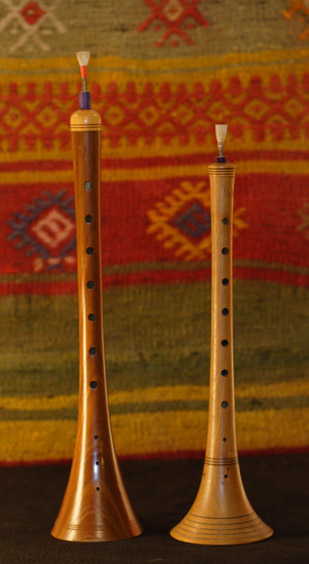
Other double-reed instruments




Frequently asked questions
What does a great Highland bagpipe sound like?
As one of the double-reed instruments, its sound comes from the way two reeds beat against each other.
What type of instrument is the great Highland bagpipe?
It is classified as double-reed instruments (Hornbostel–Sachs 422.112-7+422.22-62).
Sources & credits
- Wikidata Q2164192 – CC0
- Wikipedia: Great Highland bagpipe – CC BY-SA 4.0
- Image by User:Mushummel – Public domain