How the heckelphone makes its sound
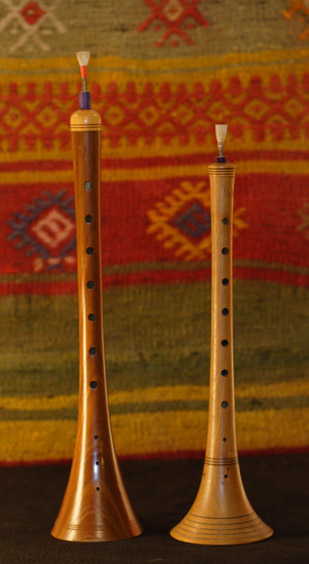
In the Hornbostel–Sachs system, which classifies instruments by how they produce sound, the heckelphone belongs to the double-reed instruments: two reeds beat against each other – oboes, bassoons, shawms and the duduk.
More broadly it is one of the aerophones (wind instruments), where sound comes from vibrating air.
Players shape its sound through technique and materials; the resonating body filters the raw vibration, boosting some harmonics and damping others.
From Wikipedia
The heckelphone (German: Heckelphon) is a musical instrument invented by Wilhelm Heckel and his sons. The idea of inventing the instrument was initiated by Richard Wagner, who suggested its concept at the occasion of a visit of Wilhelm Heckel in 1879. Introduced in 1904, the heckelphone resembles an oboe but is pitched an octave lower, similar to the bass oboe. In addition to the pitch difference, the heckelphone has a larger bore.
Other double-reed instruments




Frequently asked questions
What does a heckelphone sound like?
As one of the double-reed instruments, its sound comes from the way two reeds beat against each other.
What type of instrument is the heckelphone?
It is classified as double-reed instruments (Hornbostel–Sachs 422.112-71).
Sources & credits
- Wikidata Q1571002 – CC0
- Wikipedia: Heckelphone – CC BY-SA 4.0
- Image by Unknown author Unknown author – CC BY-SA 4.0