How the Northumbrian smallpipes makes its sound
In the Hornbostel–Sachs system, which classifies instruments by how they produce sound, the Northumbrian smallpipes belongs to the double-reed instruments: two reeds beat against each other – oboes, bassoons, shawms and the duduk.
More broadly it is one of the aerophones (wind instruments), where sound comes from vibrating air.
Players shape its sound through technique and materials; the resonating body filters the raw vibration, boosting some harmonics and damping others.
From Wikipedia
The Northumbrian smallpipes (also known as the Northumbrian pipes) are bellows-blown bagpipes from Northeastern England, where they have been an important factor in the local musical culture for more than 250 years. The family of the Duke of Northumberland have had an official piper for over 250 years. The Northumbrian Pipers' Society was founded in 1928, to encourage the playing of the instrument and its music; Although there were so few players at times during the last century that some feared the tradition would die out, there are many players and makers of the instrument nowadays, and the Society has played a large role in this revival. In more recent times the Mayor of Gateshead and the Lord Mayor of Newcastle have both established a tradition of appointing official Northumbrian pipers.
Other double-reed instruments


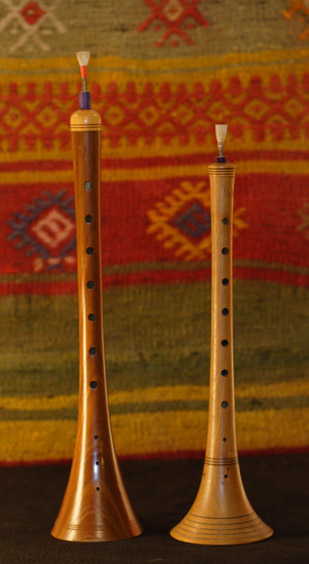


Frequently asked questions
What does the Northumbrian smallpipes sound like?
As one of the double-reed instruments, its sound comes from the way two reeds beat against each other.
What type of instrument is the Northumbrian smallpipes?
It is classified as double-reed instruments (Hornbostel–Sachs 422.111.2+422.22-62).
Where does the Northumbrian smallpipes come from?
The Northumbrian smallpipes originates from United Kingdom.
Sources & credits
- Wikidata Q1046018 – CC0
- Wikipedia: Northumbrian smallpipes – CC BY-SA 4.0
- Image by No machine-readable author provided. Zanaq assumed (based on copyright claims). – Public domain