How the ottu makes its sound
In the Hornbostel–Sachs system, which classifies instruments by how they produce sound, the ottu belongs to the double-reed instruments: two reeds beat against each other – oboes, bassoons, shawms and the duduk.
More broadly it is one of the aerophones (wind instruments), where sound comes from vibrating air.
Press play above and watch the spectrum: the evenly spaced peaks are harmonics, and their relative strength is what gives the instrument its character.
From Wikipedia
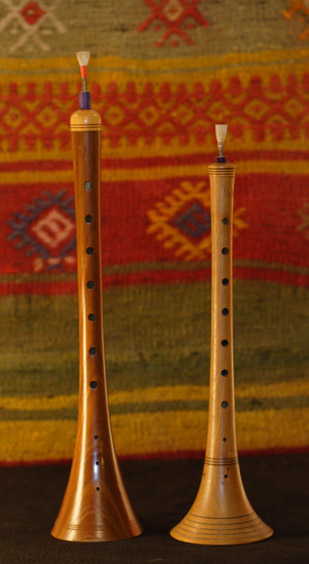
The ottu (or otter) is a double reed wind instrument, used in Carnatic music of Southern India to provide a drone accompaniment to the similar nadaswaram oboe.
Like the nadaswaram, the ottu is a large conical instrument, measuring approximately two and a half feet in length. This traditional Indian wind instrument shares similarities with the nadaswaram in terms of size and shape, contributing to its powerful and resonant sound. The ottu plays a crucial role in South Indian classical music, often accompanying the nadaswaram in temple rituals and ceremonial occasions. Its construction and design are meticulously crafted to produce a deep, continuous drone that complements the melodic lines played by the nadaswaram.
Other double-reed instruments




Frequently asked questions
What does an ottu sound like?
As one of the double-reed instruments, its sound comes from the way two reeds beat against each other.
What type of instrument is the ottu?
It is classified as double-reed instruments (Hornbostel–Sachs 422.112).
Where does the ottu come from?
The ottu originates from South India.