How the shawm makes its sound
In the Hornbostel–Sachs system, which classifies instruments by how they produce sound, the shawm belongs to the double-reed instruments: two reeds beat against each other – oboes, bassoons, shawms and the duduk.
More broadly it is one of the aerophones (wind instruments), where sound comes from vibrating air.
Its timbre – the colour that lets you tell it apart from other instruments playing the same note – comes from the mix of overtones its body and resonator emphasise.
From Wikipedia
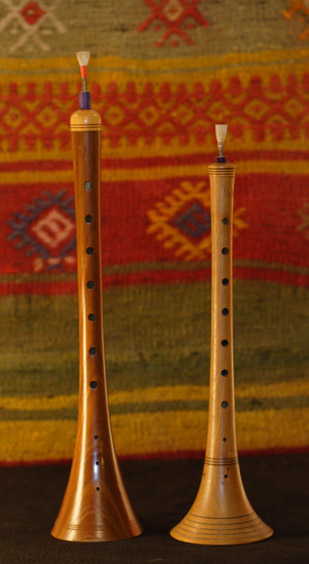
The shawm is a conical bore, double-reed woodwind instrument made in Europe from the 13th or possibly 12th century to the present day. It achieved its peak of popularity during the medieval and Renaissance periods, after which it was gradually eclipsed by the oboe family of descendant instruments in classical music. It is likely to have come to Western Europe from the Eastern Mediterranean around the time of the Crusades. Double-reed instruments similar to the shawm were long present in Southern Europe and the East, for instance the ancient Greek, and later Byzantine aulos, the closely related sorna and zurna, and the Armenian duduk.
Other double-reed instruments




Frequently asked questions
What does a shawm sound like?
As one of the double-reed instruments, its sound comes from the way two reeds beat against each other.
What type of instrument is the shawm?
It is classified as double-reed instruments (Hornbostel–Sachs 422.112).
Sources & credits
- Wikidata Q677921 – CC0
- Wikipedia: Shawm – CC BY-SA 4.0
- Image by Michael Praetorius, scanned by Matthias.Gruber at de.wikipedia – Public domain