How the taepyeongso makes its sound
In the Hornbostel–Sachs system, which classifies instruments by how they produce sound, the taepyeongso belongs to the double-reed instruments: two reeds beat against each other – oboes, bassoons, shawms and the duduk.
More broadly it is one of the aerophones (wind instruments), where sound comes from vibrating air.
Its timbre – the colour that lets you tell it apart from other instruments playing the same note – comes from the mix of overtones its body and resonator emphasise.
From Wikipedia
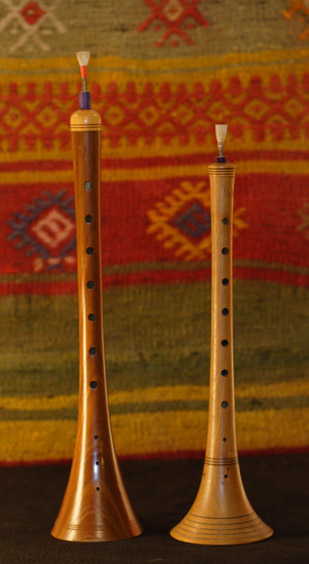
The taepyeongso (Korean: 태평소; lit. 'big peace wind instrument'), also called hojok, hojeok 호적 號笛/胡笛, nallari, or saenap, 嗩吶, is a Korean double reed wind instrument in the shawm or oboe family. It is possibly descended from the Persian sorna and is closely related to the Chinese suona. It has a conical wooden body made from yuja (citron), daechu (jujube), or yellow mulberry wood, with a metal mouthpiece and cup-shaped metal bell. It originated during the Goryeo period (918–1392).
The loud and piercing sound it produces has kept it confined mostly to Korean folk music (especially "farmer's band music") and to marching bands, the latter performed for royalty in the genre known as daechwita. It is, however, also used sparingly in other genres, including Confucian, Buddhist and Shamanist ritual musics, neo-traditional/fusion music and K-pop, included in works such as "Lalalay" by Sunmi (2019).
Other double-reed instruments




Frequently asked questions
What does a taepyeongso sound like?
As one of the double-reed instruments, its sound comes from the way two reeds beat against each other.
What type of instrument is the taepyeongso?
It is classified as double-reed instruments (Hornbostel–Sachs 422.112).
Sources & credits
- Wikidata Q842190 – CC0
- Wikipedia: Taepyeongso – CC BY-SA 4.0
- Image by Sguastevi – CC BY-SA 4.0