How the Wiener oboe makes its sound
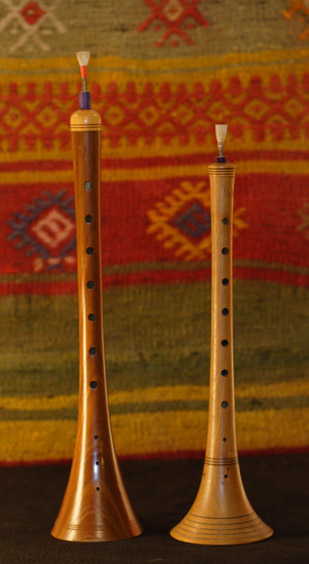
In the Hornbostel–Sachs system, which classifies instruments by how they produce sound, the Wiener oboe belongs to the double-reed instruments: two reeds beat against each other – oboes, bassoons, shawms and the duduk.
More broadly it is one of the aerophones (wind instruments), where sound comes from vibrating air.
Its timbre – the colour that lets you tell it apart from other instruments playing the same note – comes from the mix of overtones its body and resonator emphasise.
From Wikipedia
The Akademiemodel Wiener oboe, commonly referred to as the Wiener oboe or Viennese oboe, is a type of modern oboe first developed in the 1880s by Josef Hajek. The design of the Wiener oboe retains the essential bore and tonal characteristics of the historical oboe. The Wiener oboe is named after its origins in Vienna (German: Wien).
Other double-reed instruments




Frequently asked questions
What does the Wiener oboe sound like?
As one of the double-reed instruments, its sound comes from the way two reeds beat against each other.
What type of instrument is the Wiener oboe?
It is classified as double-reed instruments (Hornbostel–Sachs 422.112-71).
Sources & credits
- Wikidata Q7999138 – CC0
- Wikipedia: Wiener oboe – CC BY-SA 4.0
- Image by hautbois – Public domain