How the xeremia makes its sound
In the Hornbostel–Sachs system, which classifies instruments by how they produce sound, the xeremia belongs to the double-reed instruments: two reeds beat against each other – oboes, bassoons, shawms and the duduk.
More broadly it is one of the aerophones (wind instruments), where sound comes from vibrating air.
Its timbre – the colour that lets you tell it apart from other instruments playing the same note – comes from the mix of overtones its body and resonator emphasise.
From Wikipedia
The xeremia is a type of bagpipe native to the island of Majorca (Mallorca). It consists of a bag made of skin (or modern synthetic materials), known as a sac or sarró which retains the air, a blowpipe (bufador), a melody pipe or chanter (grall), and several, generally three, drones (bordons). The primary drone (roncó) sounds a tonic note, but the other drones are sometimes simply false drones for ornamentation.
The xeremia has a distinctively bright and piercing sound, which has traditionally accompanied festivals and other activities in the islands throughout history.
Other double-reed instruments


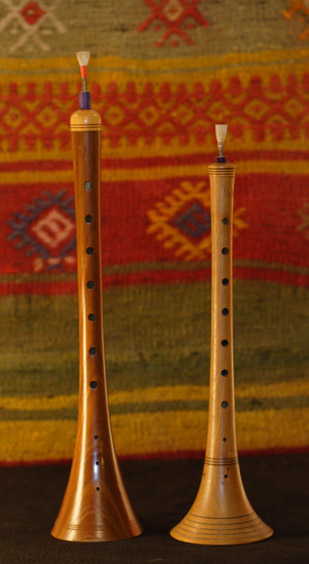


Frequently asked questions
What does a xeremia sound like?
As one of the double-reed instruments, its sound comes from the way two reeds beat against each other.
What type of instrument is the xeremia?
It is classified as double-reed instruments (Hornbostel–Sachs 422.112).
Sources & credits
- Wikidata Q2598011 – CC0
- Wikipedia: Xeremia – CC BY-SA 4.0
- Image by Sguastevi – CC BY-SA 4.0