How the trompeta china makes its sound
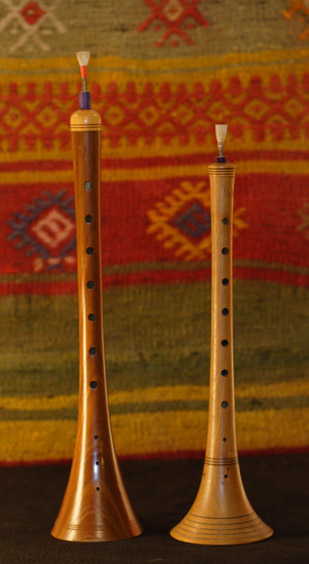
In the Hornbostel–Sachs system, which classifies instruments by how they produce sound, the trompeta china belongs to the double-reed instruments: two reeds beat against each other – oboes, bassoons, shawms and the duduk.
More broadly it is one of the aerophones (wind instruments), where sound comes from vibrating air.
Players shape its sound through technique and materials; the resonating body filters the raw vibration, boosting some harmonics and damping others.
From Wikipedia
The trompeta china (also called corneta china), a Cuban traditional wind instrument, is actually the Chinese suona, an instrument in the oboe family (and thus not a trumpet, despite its name) introduced to Cuba by Chinese immigrants during the colonial period (specifically the late nineteenth century).
The trompeta china is used primarily in Cuban carnival music, particularly in the eastern region of Santiago, where it is an integral part of the comparsa (carnival musical ensemble). The instrument has also been adopted for use in some forms of son. Players of the trompeta china are not necessarily of Chinese ancestry, and in Cuba the instrument's playing style is more imitative of a trumpet than the traditional playing style of the suona or any other Chinese instrument.
Other double-reed instruments




Frequently asked questions
What does a trompeta china sound like?
As one of the double-reed instruments, its sound comes from the way two reeds beat against each other.
What type of instrument is the trompeta china?
It is classified as double-reed instruments (Hornbostel–Sachs 422.112).
Sources & credits
- Wikidata Q541464 – CC0
- Wikipedia: Trompeta china – CC BY-SA 4.0
- Image by Christian Pirkl – CC BY-SA 4.0