How the Dilruba makes its sound
In the Hornbostel–Sachs system, which classifies instruments by how they produce sound, the Dilruba belongs to the lutes: strings run parallel to a soundboard and along a neck – the family of the guitar, violin, sitar and oud.
More broadly it is one of the chordophones (string instruments), where sound comes from vibrating strings, amplified by a resonating body.
Its timbre – the colour that lets you tell it apart from other instruments playing the same note – comes from the mix of overtones its body and resonator emphasise.
From Wikipedia
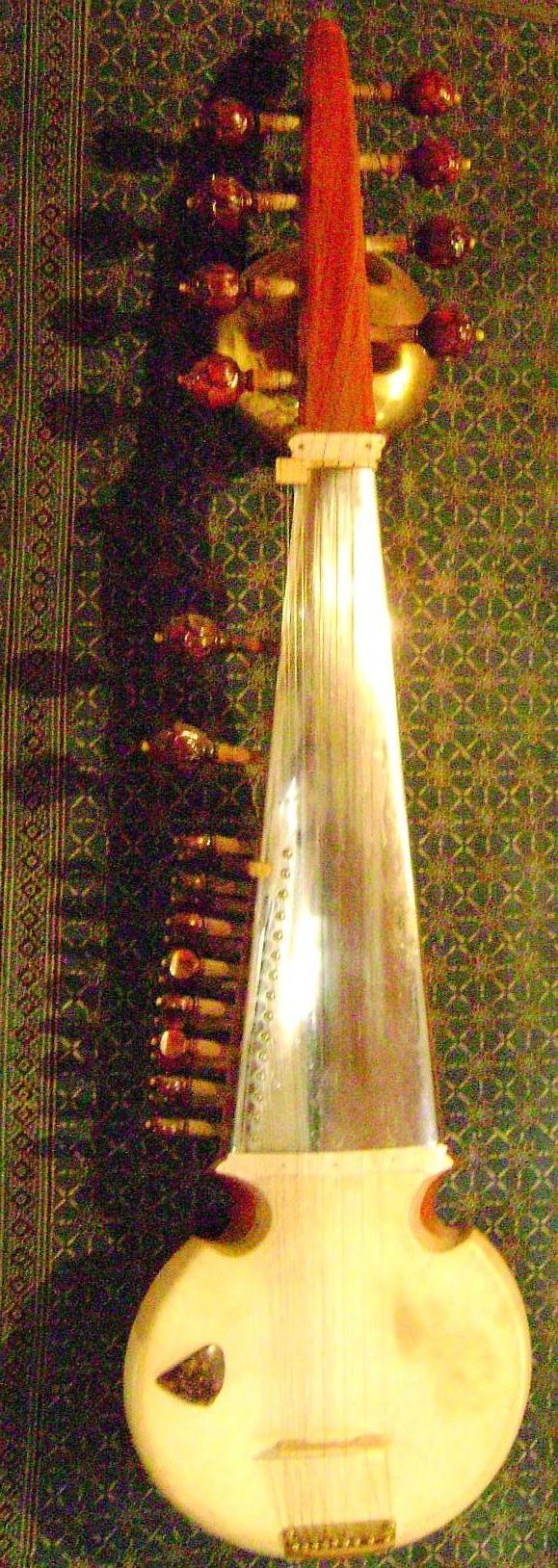
The dilruba (also spelled dilrupa) is a bowed musical instrument originating in India. It is a type of bowed sitar that's slightly larger than an esraj and has a larger, square resonance box like a sarangi. The dilruba holds particular importance in Sikh history.
It became more widely known outside India in the 1960s through use in songs by Western artists, such as the Beatles during their psychedelic phase (most notably in the song "Within You Without You").
Other lutes


More instruments from India



Frequently asked questions
What does the Dilruba sound like?
As one of the lutes, its sound comes from the way strings run parallel to a soundboard and along a neck.
What type of instrument is the Dilruba?
It is classified as lutes (Hornbostel–Sachs 321.321-7).
Where does the Dilruba come from?
The Dilruba originates from India.
Sources & credits
- Wikidata Q5277044 – CC0
- Wikipedia: Dilruba – CC BY-SA 4.0
- Image by gurmatsangeetorg – CC BY 2.0