How the tritantri veena makes its sound
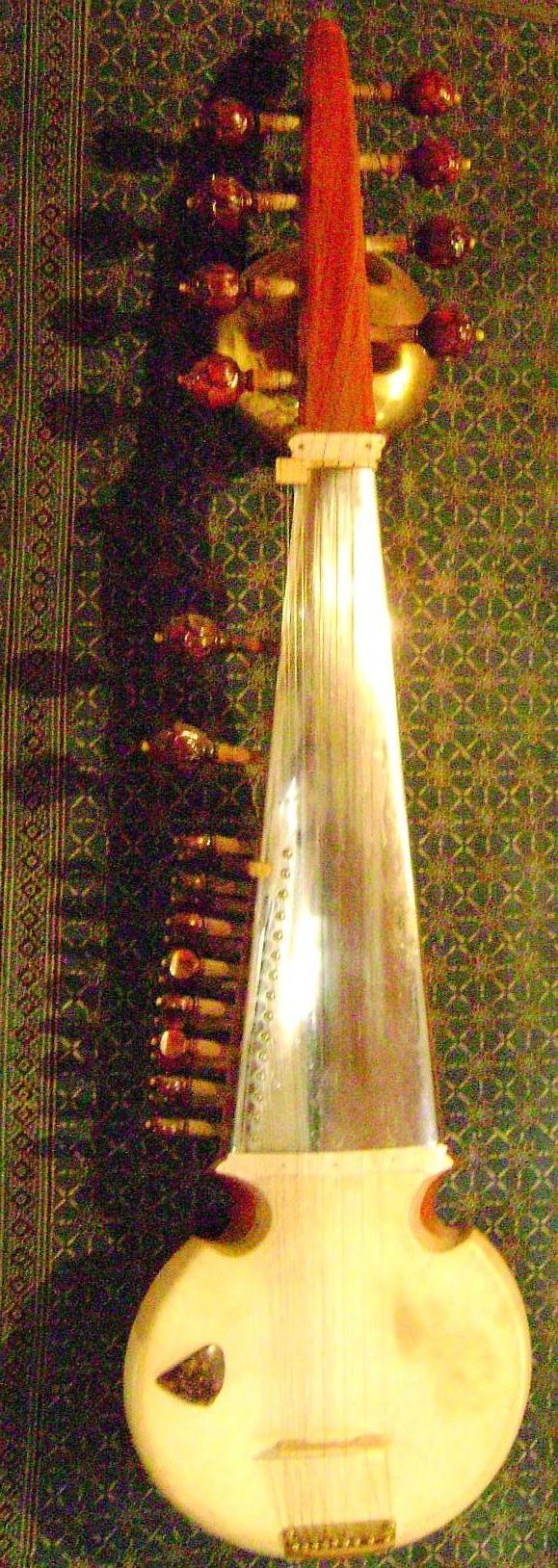
In the Hornbostel–Sachs system, which classifies instruments by how they produce sound, the tritantri veena belongs to the lutes: strings run parallel to a soundboard and along a neck – the family of the guitar, violin, sitar and oud.
More broadly it is one of the chordophones (string instruments), where sound comes from vibrating strings, amplified by a resonating body.
Its timbre – the colour that lets you tell it apart from other instruments playing the same note – comes from the mix of overtones its body and resonator emphasise.
From Wikipedia
Tritantri or Tritantrika vina/veena can refer to two different instruments:
A medieval stick zither with 3 strings.
Other lutes


More instruments from India



Frequently asked questions
What does a tritantri veena sound like?
As one of the lutes, its sound comes from the way strings run parallel to a soundboard and along a neck.
What type of instrument is the tritantri veena?
It is classified as lutes (Hornbostel–Sachs 321.322).
Where does the tritantri veena come from?
The tritantri veena originates from India.