How the müsa makes its sound
In the Hornbostel–Sachs system, which classifies instruments by how they produce sound, the müsa belongs to the double-reed instruments: two reeds beat against each other – oboes, bassoons, shawms and the duduk.
More broadly it is one of the aerophones (wind instruments), where sound comes from vibrating air.
Players shape its sound through technique and materials; the resonating body filters the raw vibration, boosting some harmonics and damping others.
From Wikipedia
The müsa, or müsa appenninica, is a bagpipe from the Apennines of north-west Italy which was commonly used to accompany the piffero in the folk music of the Quattro Province: the ‘Four Provinces’ of (Pavia, Alessandria, Genoa and Piacenza). In the 1930s, however, the instrument fell into disfavour and was generally displaced by the accordion.
Other double-reed instruments


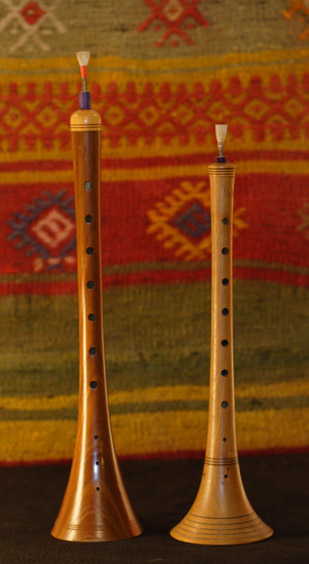


More instruments from Italy


Frequently asked questions
What does a müsa sound like?
As one of the double-reed instruments, its sound comes from the way two reeds beat against each other.
What type of instrument is the müsa?
It is classified as double-reed instruments (Hornbostel–Sachs 422.112+422.211.1-62).
Where does the müsa come from?
The müsa originates from Italy.
Sources & credits
- Wikidata Q3869274 – CC0
- Wikipedia: Müsa – CC BY-SA 4.0
- Image by The original uploader was Dani4P at Italian Wikipedia . – CC BY-SA 3.0